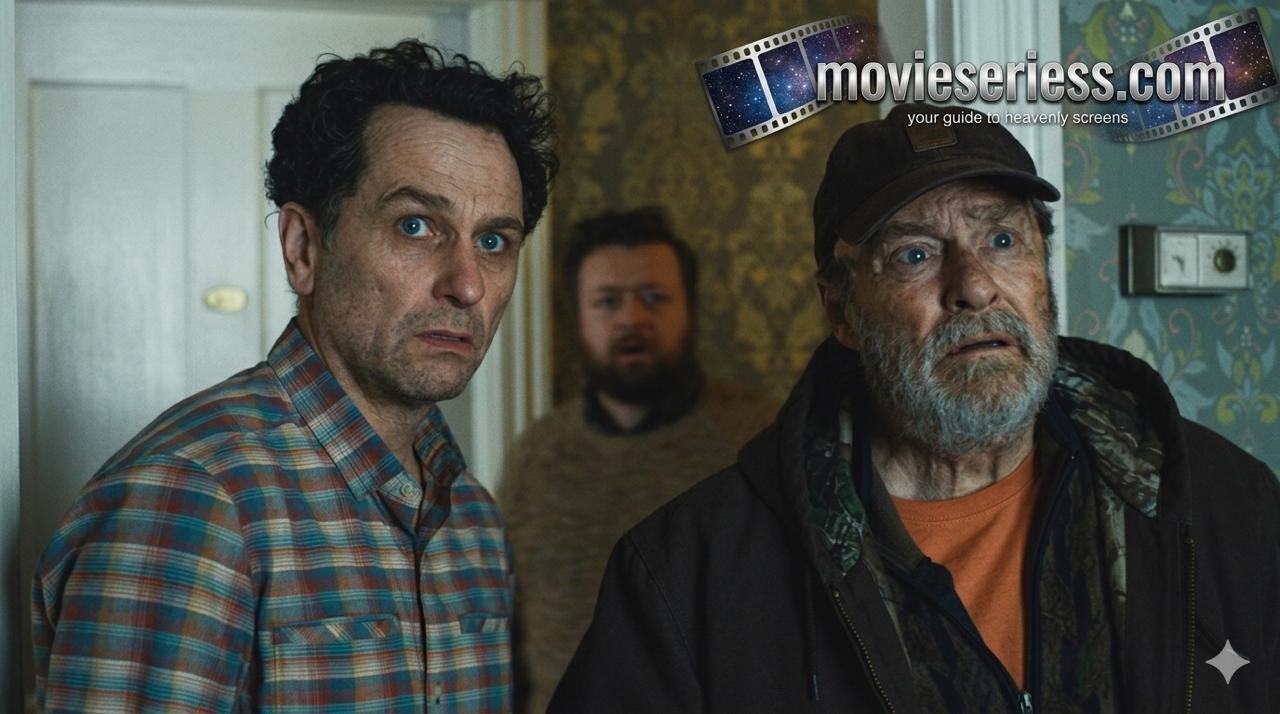
There is something very unsettling about watching someone slowly lose control thinking they are finally getting everything they ever wanted.
That’s exactly what Widow’s Bay does in Season 1 Episode 4, “Beach Reads,” an eerie and emotionally sharp chapter that shines a spotlight on Patricia. What starts as an awkward attempt at social redemption devolves into one of the series’ most disturbing supernatural happenings yet.
This episode doesn’t just up the ante on the town’s ever-growing paranormal mystery. It explores loneliness, humiliation and the dangerous lure of validation, making Patricia’s emotional vulnerability the perfect entry point for whatever darkness lurks beneath Widow’s Bay.
And by the time the credits roll, the show leaves viewers with a chilling last image that changes everything.
Patricia’s desperation lays the groundwork for disaster
If previous episodes hinted at Widow’s Bay feeding on human frailties, Episode 4 confirms it.
Patricia spends a large part of the episode trying to find a sense of belonging again. On her mobile library book donation route she discovers a self-help book called Your Turn: Out With the Old and In With the You. At first glance it seems harmless, the sort of generic reinvention guide that would gather dust on some forgotten shelf.
But this is Widow’s Bay, and nothing ever happens by accident.
The book’s publication is especially cruel, coming at a time when Patricia is in such emotional distress. She’s still traumatized from surviving the serial killer attacks that left four other women dead. But instead of empathy, she’s ostracized by the very people who should know her pain.
At a reunion, her peers reject her story outright, branding her a liar who is embellishing her trauma to seek attention. This is one of the most uncomfortable moments in the episode, because it feels so painfully real. The cruelty is not magic. It is human.
And that denial is the opening the darkness gets in.
The Party That Slowly Becomes a Horror Show
Patricia’s decision to throw her own party seems more like quiet desperation than confidence.
Inspired by the increasingly obsessive commands from the mysterious book, she dedicates herself to planning a lavish party, convinced that this will finally endear her to people.
The reason this writing is so clever, is because the show tricks the viewers into thinking that this is just a weird social comedy subplot. Patricia frets over decorations, pressures Dale to DJ, obsessively tracks RSVPs, and spirals as attendance looks dire.
It’s familiar enough to be comfortable.
Then the episode turns.
Then the partygoers arrive, and for a moment it looks as if things are going Patricia’s way. The atmosphere changes. The punch she serves is such that it makes her guests suddenly warm and enthusiastic, even affectionate.
And that’s where the discomfort starts to come in.
The tonal shift is handled beautifully. There’s no sudden jump scare or big reveal right away. It’s a weirdness creep that the episode lets happen organically, through the little things: Patricia’s robotic speech, Moira’s visible discomfort, the increasingly bizarre energy of the room.
But by the time Sheriff Bechir gets here, the spell is broken.
Widow’s Bay is at its creepiest when revealed
That kitchen reveal, nightmare fuel.
Bechir finds Patricia surrounded by strange ritual objects: slaughtered crows, broken kitchen-ware, occult-like decorations, and a strange crown, hand-made, perched on her head.
It’s a brilliantly staged moment because you experience the same shock Patricia does when she finally snaps out of her trance.
All that she thought she had made for the party turns out to be something much darker.
The self-help guide was never really a self-help book. It was a spell book.
This reveal is particularly effective in that it recontextualizes the whole episode. It was all fake, none of it was real, all Patricia’s hopeful planning, her excitement, her belief that she was finally connecting with people.
She was being played the whole time.
And then the horror gets even worse.
Outside, her guests walk toward the beach in a zombified trance. Their bloodied mouths and statue-like expressions turn what looked like harmless partying into something terrifyingly ritualistic.
It’s some of the most powerful imagery the series has turned out.
Sheriff Bechir Takes Center Stage
Episode 4 also gives Sheriff Bechir more meaningful role.
Until now, he’s mostly been the earthbound authority figure trying to make sense of the increasingly bizarre events around him. Here he is forced to face undeniable supernatural horror head-on.
His desperate attempts to stop the beach procession add urgency to the climax, and his radio call for backup means that even the police can no longer ignore the fact that the problems of Widow’s Bay are explainable.
It’s a pivotal moment for the character.
Now he’s not investigating weird stuff anymore.
He’s coming through.
Patricia Is the Emotional Heart of the Episode
This is Patricia’s episode, and the show is successful because it doesn’t turn her into just another supernatural victim.
Her story resonates because it is based on something painfully familiar: desiring the embrace of people who have already chosen not to embrace you.
The tragic believability of the supernatural manipulation is in how humiliated she is through the episode. She is not taken in by the spell because she is careless.
She falls because she hurts.
That emotional grounding gives some real weight to the horror.
When she burns the book and breaks the spell at last, there is no triumphant relief. Instead she is met with accusations by Kris who immediately assumes Patricia has drugged everyone.
Even when she saves them she is misunderstood.
That final rejection hits hard.
That Ending Changes The Whole Mystery
Just when it seems the episode is about to end, Widow’s Bay delivers its biggest surprise yet.
Patricia accompanies Tom and Wyck to see Father Bryce and discovers the church office in disarray.
Then comes the reveal: Father Bryce hanging dead, seemingly by suicide.
It’s a disturbing last image that raises more questions than it answers.
Did Bryce get locked up?
Did he know too much about things?
Or was he the next victim of the same force that controlled Patricia?
The charred paper nearby strongly suggests that this was no random happening.
Someone or something is trying to clean up the evidence.
What Episode 4 Reveals About the Real Threat in Widow’s Bay
The pattern is becoming difficult to ignore.
The evil lurking off Widow’s Bay seems to feast on emotional wounds.
Tom’s concerns. Patricia’s loneliness. The collective denial of the town.
This force, be it supernatural, curse or something even older, seems to use personal trauma as a gateway to exert control.
That’s what makes it so effective as a horror.
It’s not attacking for no reason.
It’s being selective with people.
If that theory is correct, it means nearly everyone in Widow’s Bay could be in danger.
Verdict Final
This episode, “Beach Reads,” is Widow’s Bay’s best one yet.
It balances psychological horror, emotional storytelling and escalating supernatural mystery with impressive confidence. More importantly, it proves the show is evolving beyond isolated scares into something much more layered and ambitious.
The episode has an emotional weight thanks to Patricia’s tragic fall and the beach scene and Father Bryce’s death take the larger mystery down a darker path.
The first three episodes might have suggested something sinister was afoot in Widow’s Bay, but Episode 4 is impossible to look away from.
Rating: 9/10
Widow’s Bay doesn’t toy with its darkness any more. It plunges right in.