Meta Description:
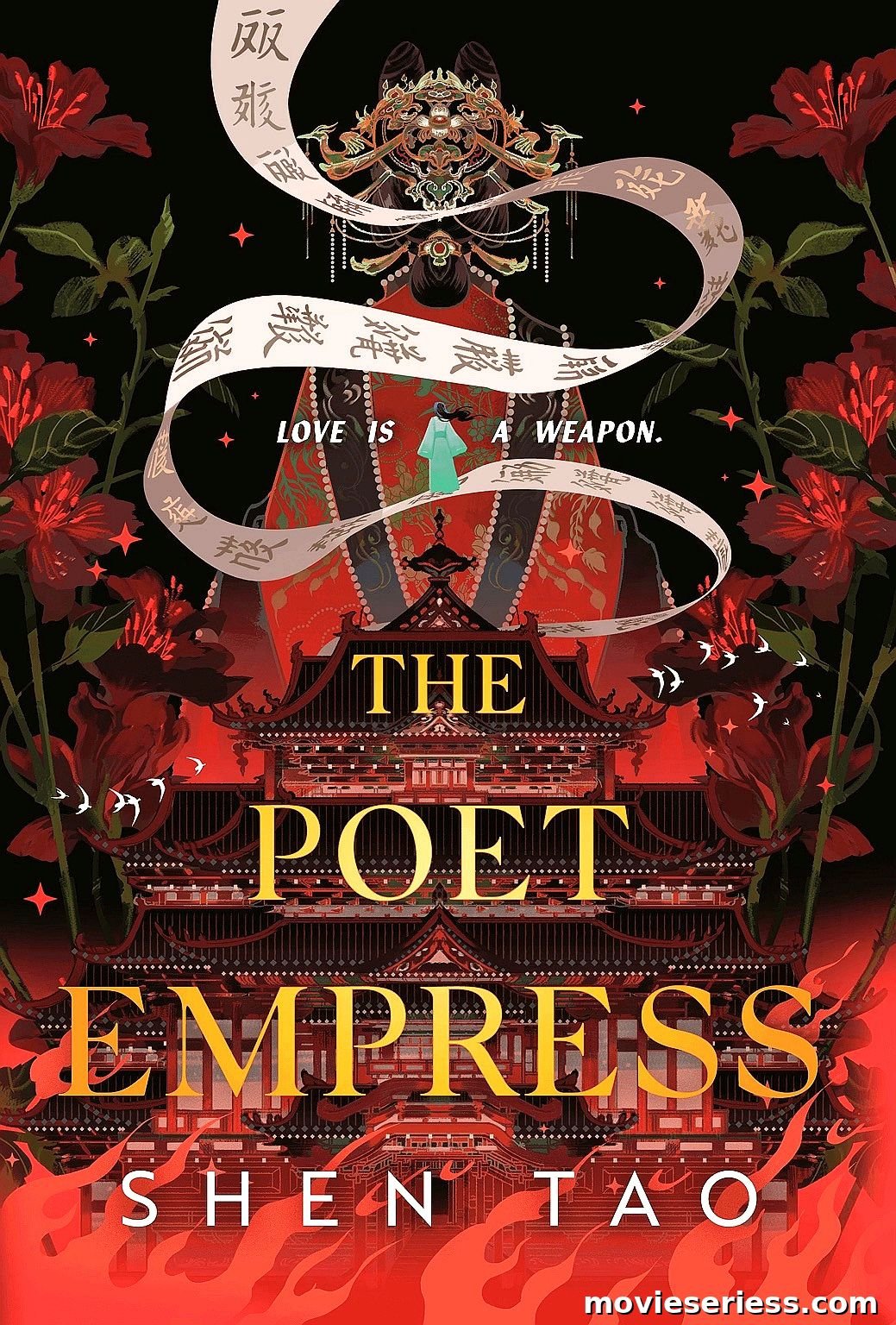
Shen Tao’s The Poet Empress is among the best fantasy novels of 2026, with court intrigue, dark magic, and emotional warfare.
Introduction
The Poet Empress is one of those rare fantasy debuts that comes with a lot of fanfare. Since its January 2026 publication, Shen Tao’s political fantasy has taken book communities by storm, lauded for its brutal palace politics, emotionally complex characters, and one-of-a-kind magic system rooted in poetry.
Of course, the hype brings up a tough question: does the novel really merit the obsession?
Surprisingly, yes—mostly.
While not without its flaws, The Poet Empress provides the kind of immersive reading experience that will keep you up long after midnight. It fuses dynastic warfare, moral corruption and psychological manipulation into a story that feels intimate even as kingdoms fall around it.
More importantly, it knows something many modern fantasy novels forget: tension is more important than spectacle.
A kingdom based on poetry and blood
On the surface, the world of Tensha seems almost dreamlike. Poetry is magic, dragons walk with ghosts, and the royal Azalea Dynasty has mystical sigil blessings of power and status.
But beneath the beauty lies decay.
The empire is about to starve. War has ravaged people everyday. The emperor is dead. And as the kingdom crumbles, his heirs are too busy squabbling over the succession to care about the misery outside the palace walls.
Then into the chaos comes Yin Wei, a farmer’s daughter who cares more about survival than politics. Her decision to become one of Prince Guan Terren’s concubines is born not of ambition, but of desperation. She wants food for her village. That simple motive makes her instantly fascinating.
The novel throws Wei into danger right away. She’s caught up in a vicious competition among women all vying for favor, status and security before she gets to the prince’s court. From there the story devolves into assassinations, betrayals and faction warfare.
The book is so good because it doesn’t romanticize palace life. Every conversation is loaded. All alliances seem to be temporary.
Yin Wei Is Not Your Typical Fantasy Hero
One of the novel’s greatest strengths is its protagonist.
Wei is smart, but not infallible. Merciful, but with the capacity for cruelty. She adapts quickly because she has no choice. The more involved she becomes in the political machinery around Prince Terren, the more she changes in uncomfortable ways.
The transformation. That’s where things get interesting…
Fantasy readers are often looking for “chosen one” stories where morally upright heroes overthrow evil systems. The Poet Empress will not hear of it. Wei learns how the power works and eventually uses those same tactics herself to survive.
Wei’s approach to power, temptation, and violence recalls The Poppy War’s lead character, Rin. Both characters feel molded by systems built to consume them.
But Wei still feels different. The stakes may become national, but her motives never stop being deeply personal throughout the novel.
Prince Terren Steals the Second Half
The early chapters present Guan Terren as nothing more than a monster.
He’s mean, he’s volatile, he’s scary in ways that make you instantly distrust him. The characterization seems at first almost too evil to be believable, almost too simple.
Shen Tao then slowly complicates him.
The novel reconstructs Terren through shattered stories, political memories, and testimonies of advisors, servants and members of the royal family. Readers begin to see how trauma, manipulation and dynastic pressure shaped him into something terrifying.
The book, above all, never makes excuses for him.
That’s why the relationship between Wei and Terren works so well. The reader is constantly torn between pity and disgust and their relationship is the emotional center of the novel.
Whenever sympathy begins to arise, Terren does something unforgivable.
And somehow the story still manages to emotionally engage readers with him anyway.
The Structure of the Novel Makes the Story Addictive
One of the reasons The Poet Empress was such a massive word-of-mouth success is pacing.
The novel moves fast without feeling superficial. Shen Tao does not fall prey to the usual fantasy trap of endless info dumps and overblown subplots. The story is a standalone so every chapter feels like it serves a purpose.
The non-linear story telling helps a lot.
Rather than offering history lessons in long blocks of text, the novel reveals information through personal recollections and political secrets. The “heart-spirit poem” storyline is a particularly clever narrative device because it allows Wei – and the audience – a way to learn about Terren’s past gradually, from several different points of view.
This multi-tiered storytelling also adds depth to supporting characters like Chief Advisor Hesin, and various members of the Azalea Dynasty.
No one feels completely innocent. No one is purely evil.
There is a bite to the novel from that moral ambiguity.
The Magic System is Pretty… and Frustrating at Times
The book is strong, but it can get murky when it gets too technical on the magical mechanics.
Sigil blessings are not always clearly differentiated from poetic magic. Some of the supernatural stuff, especially when it comes to ghosts, feels deliberately vague, but the vagueness can be distracting.
There are also unanswered questions about who gets to access magic and why. Some of the literate non-royal characters have poetic abilities, while others apparently do not, with little explanation as to why.
Fortunately, these problems rarely intrude on the emotional flow of the story.
The atmosphere is strong enough that the reader will probably accept the ambiguity and continue.
The Women Around Wei Needed More Space
The novel is excellent at developing Terren and Wei, but some female characters feel underserved.
Especially Empress Sun, who arrives with great presence and political clout, but the story doesn’t often get into her headspace. Maro’s wife suffers from the same problem, often feeling more like an obstacle than a fully realized political player.
That absence is felt because the novel is so interested in power dynamics and emotional complexity.
More attention to these women could have elevated the political side of the story even higher.
A Hopeful End, Surprisingly
Given how dark the novel gets, the ending feels cleaner and more optimistic than you might expect.
Some readers will welcome the emotional closure. Some may prefer that Shen Tao had taken a messier path that better reflected the brutality of the world she created.
You could say that the final chapters water down the impact of what had seemed inevitable before.
Still, the emotional payoff largely works because the trip itself is so intense.
Concluding Remarks
The Poet Empress isn’t perfect, but it absolutely deserves a place among the most talked-about fantasy releases of 2026.
Shen Tao’s standalone fantasy, reminiscent of court intrigue, emotional devastation, and morally complex characters, has a remarkable confidence for a debut novelist. The magic system has the odd slip-up, and some of the supporting players could have done with a little more development, but the core story is compelling from start to finish.
What makes the novel truly memorable is its refusal to provide easy morality. Heroes get bought out. Monsters are humanized. And survival requires sacrifices that scar everyone involved.
If you’re looking for dark political fantasy with emotional punch and razor-sharp character work, The Poet Empress is well worth the hype.”