1 Introduction
Much of the first season of The Testaments has been spent slowly laying the emotional groundwork, but it’s in Episode 8 that those fractures finally start to show.
This chapter, titled with its central theme of emotional and institutional “brokenness,” peels away any illusions its younger characters may still have had about life within Gilead. What results is one of the series’ most awkward and quietly devastating episodes yet.
This one isn’t about big action or political upheaval, but something possibly more disturbing: the private cruelty of a system that seeks to normalize suffering.
For Agnes, Daisy and Shu it is the turning point. The decisions they take here could shape everything that follows.
The Deadweight of Gilead’s Expectations
Episode 8 wastes no time forcing Agnes face a painful reality.
The moment I hear Becka’s matched with Garth, it’s like a physical blow to the gut. There is no big bang, no explosive confrontation. Instead, the show keeps Agnes’ heartbreak simmering just below the surface, making it all the more affecting.
Her silence is deafening.
That’s what makes the moment sting all the more: Becka is not an opponent. No betrayal. Only the cold mechanics of Gilead, arranging lives like pieces on a chessboard.
As if that emotional punch wasn’t enough, Agnes gets her own match. Commander Weston.
One of the most chilling sequences of the episode is her symbolic plate-smashing ritual connected to her engagement. In theory, it is presented as a lesson in partnership and spiritual union. In practice, it seems like a blunt metaphor for what Gilead wants from its women – submission by means of deliberate breaking.
This is one of those times where the show doesn’t need to over-explain itself. The imagery does the work.
Daisy’s Secret Turns into a Dangerous Liability
Elsewhere, Daisy’s storyline builds tension in a much quieter, but no less effective, way.
Getting her period in Gilead should be a natural milestone. It is a threat, yes.
The bathroom sequence is handled so judiciously that a routine adolescent experience becomes a moment of terror. You know what’s immediately at stake, and that’s what makes the tension work.
In Gilead biology is not private. It’s political.
Daisy’s need to hide the truth shows just how bad her situation has gotten and how precarious it has become.
This also serves as one of the better character-building moments for Shu in the episode. It is heartbreaking in its own way that she admits that she feels left behind because she hasn’t gotten her period yet.
In normal times, this is the kind of insecurity many teenagers quietly live with.
Inside Gilead it becomes another form of pressure.
The fact that Shu’s younger brother was part of Angel’s Flight adds more emotional depth to the revelation. Her family’s expectations are not merely cultural, not merely personal, they are ideological. She’s carrying the weight of proving something to people who have already decided what her worth ought to be.
That added complexity makes Shu one of the show’s quietly compelling characters.
Agnes Crosses the Line
If this episode belongs to anybody, it is Agnes.
And not necessarily in a good way.
Episode 8 gets morally muddied in her handling of Hulda’s abuse allegations.
When Agnes learns that Dr. Grove has also hurt Hulda, she has a chance to show solidarity. Except the situation degenerates into one of the most uncomfortable developments of the hour.
Hulda’s decision to backpedal and call the abuse a misunderstanding says a great deal about the fear Gilead inspires in its women. The risk of being called “damaged” is enough to keep silent.
Agnes first encourages her to speak up, but what she does later leaves an ethical discomfort in the air.
The show deserves credit for not turning Agnes into a purely heroic figure.
Yes, she is a victim. Trauma doesn’t automatically make someone noble, though.
This moral ambiguity adds welcome depth to her character, making her journey far more interesting than a simple rebellion arc would have.
Aunt Lydia’s role grows more interesting
The show is very deliberate in its use of Aunt Lydia, and Episode 8 gives us another tantalizing glimpse of what she’s up to.
When Agnes finally tells her about Dr. Grove, Lydia’s reaction is naturally layered.
She offers no obvious outrage. No comforting words.
Instead she promises that the matter will be taken care of, indirectly and discreetly.
It’s the usual Lydia.
She always seems to know more than she lets on, working within systems she can’t openly take on, but quietly pulls strings when needed.
That ambiguity keeps her scenes interesting.
Viewers are left forever wondering where her true loyalties are.
Garth’s Political Legacy Adds to Family History
One of the more low-key revelations of the episode is Garth’s family history.
Garth’s place in Gilead makes more sense when it’s revealed that his father was integral in maintaining Boston’s power structure.
It also complicates his relationship with Daisy.
His inability to help her escape seems less like indifference and more like imprisonment when she begs him.
And he’s part of the system too.
That nuance is important.
The show hints that Garth may be forced to choose between family loyalty and moral responsibility someday, and Episode 8 sets the stage for that conflict without being too obvious.
The Most Powerful Scene Is The Shared Suffering
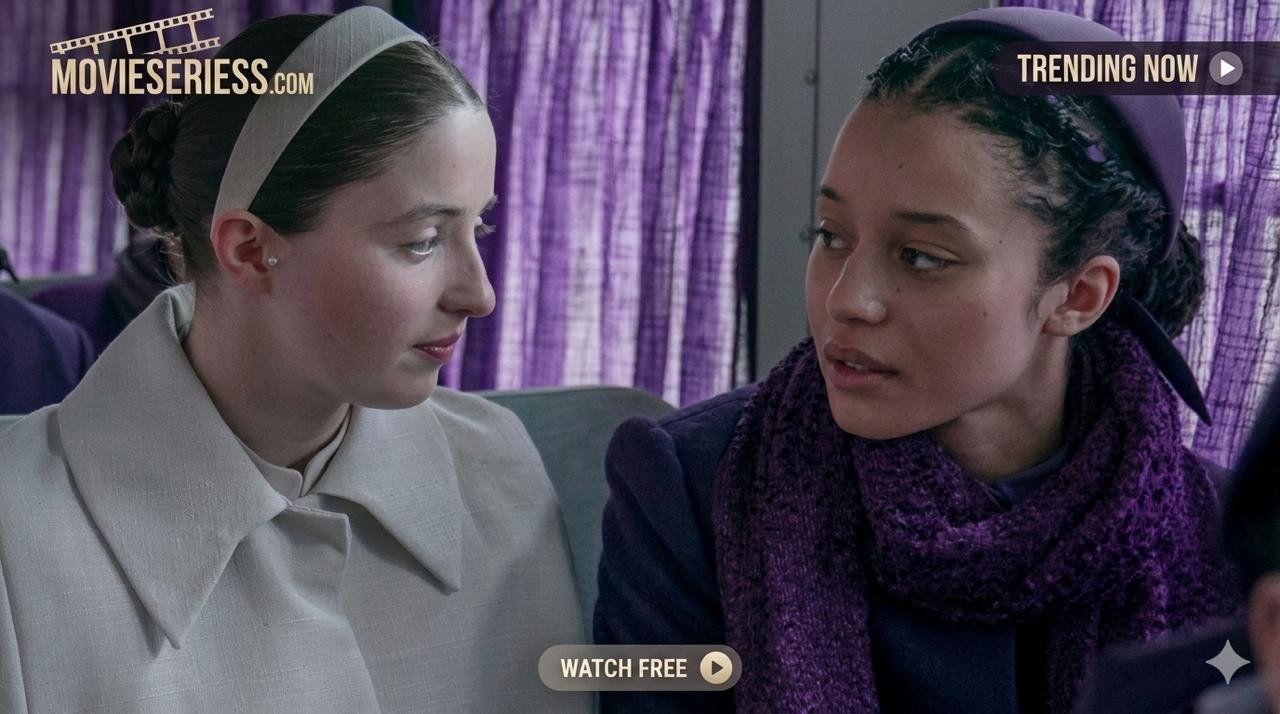
The emotional climax is late in the episode when Agnes finally opens up to Daisy about her own abuse.
It is a moment of devastating silence.
There is no dramatic speech, no theatrical collapse.
Just honest.
Daisy’s response – anger, grief, helplessness and compassion all at once – feels very real.
Their hug has more emotional weight than any major plot twist could have.
And for a show that’s all about repression and silence, the moments of real connection are all the more pronounced.
And this one connects.
A pacing problem the series still hasn’t solved.
With all its emotional strengths, Episode 8 continues a frustrating pattern for The Testaments.
The pace is still inconsistent.
There are some powerful ideas here: the emotional fallout of abuse, the psychological conditioning of Gilead’s young women, the political tension around Boston.
But the episode often feels as if it’s just spinning its wheels around these ideas, not actually advancing them.
The series needs to make atmosphere into momentum as the season heads into its final stretch.
The emotional groundwork is laid.
It needs to pay off now.
What Might Happen Next?
It could have consequences far beyond Dr. Grove, speaking to Lydia.
If Lydia does act on this, it could reveal larger institutional cracks.
Daisy’s secret, too, is clearly on borrowed time. The longer she hides her period, the more dangerous it is.
And Garth is still one of the season’s wildcards.
It’s not a question of whether he’s conflicted anymore.
Whether that conflict translates into action, it is.
Last word
It’s not explosive but it’s deeply unsettling in ways that stick with you.
It glows with emotional tension, strong performances and complex characters, especially Agnes and Daisy.
But the series continues to be plagued by narrative urgency.
But this chapter works where it counts: it forces its characters to confront uncomfortable truths, and it leaves the viewer with the uncomfortable feeling that something is starting to crack.
Rating: 8.2 out of 10
A tense episode with emotional layers that sharpen character conflict, even if the bigger story feels like it’s still building steam rather than letting it rip.