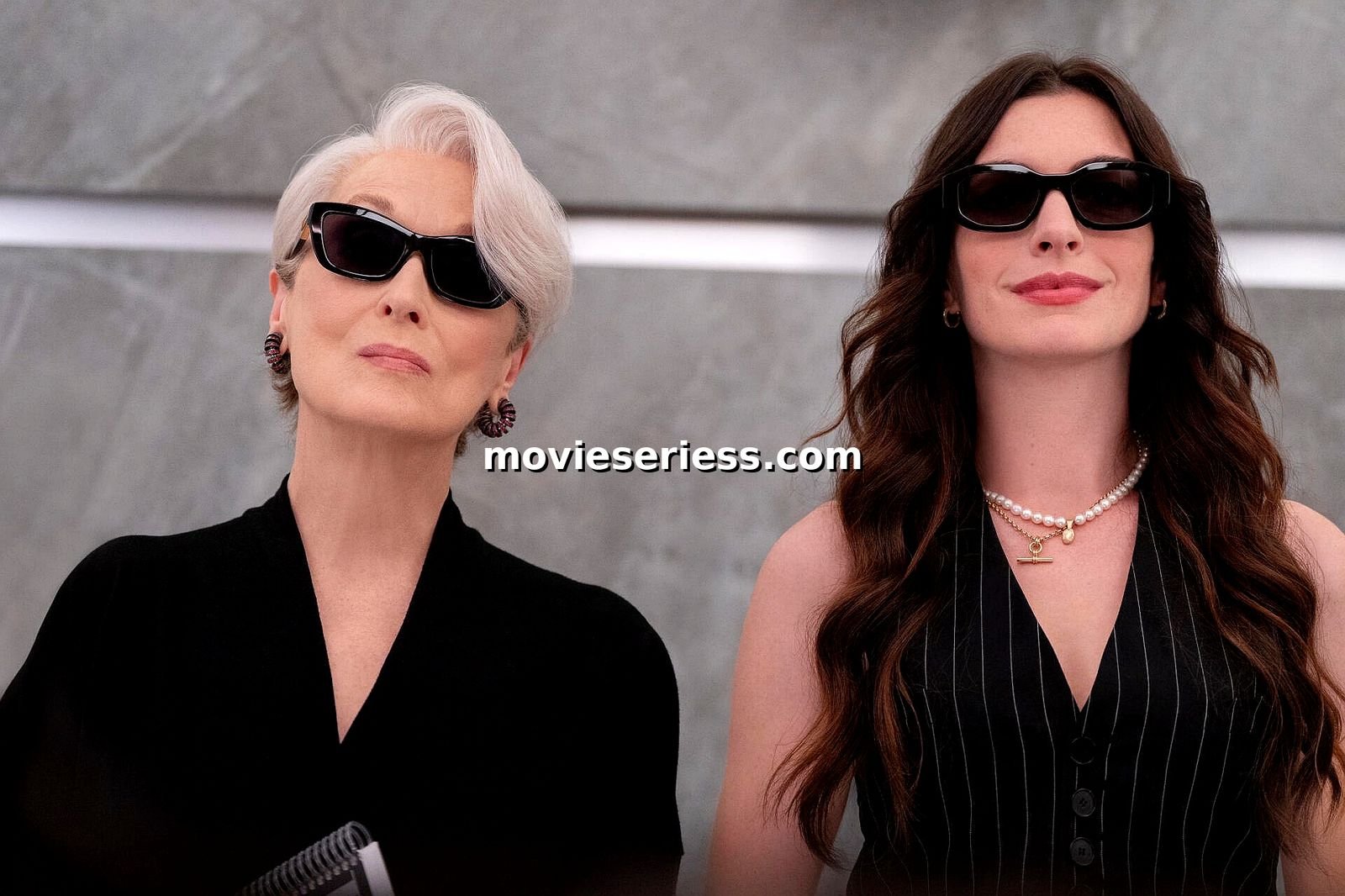
Meta Description:
The Devil Wears Prada 2: Miranda Priestly faces competition, Runway’s potential collapse and a world of chaos as Sasha Barnes changes everything.
Intro to the subject
The Devil Wears Prada 2 (2026) The world of high fashion journalism is back, only this time with a sharper, more modern edge. Nostalgia is part of its charm, but the sequel quickly turns into a tale of survival in a collapsing media landscape in which influence is measured in clicks, not craft.
At its heart are familiar faces — Miranda Priestly, Andy Sachs, Emily Charlton and Nigel — all forced to confront how much they’ve changed in a world that no longer values print legacy as it once did.
Runway is about to collapse
Runway is no longer the unassailable fashion Bible. The magazine is under fire for a damaging article that appears to glorify sweatshop labor. The backlash is immediate and brutal, and it demonstrates just how far the publication has strayed from editorial responsibility in its search for relevance.
Inside things aren’t much better. The owner, Irv, sees the brand losing credibility and an audience. To save the sinking ship, he brings back Andy Sachs, hoping her editorial instincts will help restore some integrity and attention.
But Andy has pressures of her own. To protect Runway’s name she creates an exclusive interview with billionaire Sasha Barnes, a woman who hasn’t talked to the press in years. The gamble pays off, surprisingly. The story catches on, giving the magazine a temporary bump in reputation.
But underneath this fleeting victory, Runway still faces a hard truth: print journalism is being supplanted by fast, shallow digital content, where viral visibility outweighs lasting cultural worth.
Miranda Priestly and an Evolving Industry
Miranda Priestly is still as imperious as ever, but even she can’t ignore the change happening around her. The biggest disruption is Emily Charlton, her former assistant and now a formidable rival in the same shrinking media ecosystem.
Their rivalry has gone beyond personal to strategic. They’re fighting for advertising dollars in an industry that has become more volatile.
But in the midst of the power struggle, Miranda begins to take stock of the people around her – especially Nigel and Andy. Nigel has been the unsung backbone of Runway for years, helping to shape its visual identity and editorial tone. This time around, Miranda actually acknowledges his value in some meaningful way, letting him deliver the speech at the Milan gala, a long-overdue moment of visibility for someone who’s been overlooked for far too long.
It’s a small but important shift: Miranda, the legendary perfectionist, finally admits she has underestimated loyalty and talent right under her nose.
Emily Charlton: Success, Bitterness & Emotional Barriers
Emily Charlton is still one of the most complex characters in the film. Two decades later, she remains sharp-edged, ambitious and emotionally guarded. She still harbors resentment towards Miranda, especially after being pushed out of Runway years ago.
Now Emily is divorced and beginning a new life with Benji Barnes, who was previously married to Sasha Barnes. While she appears to be in control, her world is still one of status, wealth and emotional distance.
Miranda’s blunt challenge to her identity as a “vendor, not a visionary” cuts deeper than it appears. Emily’s career has brought power, but not fulfillment.
What’s interesting about her character is the vulnerability behind the arrogance. She isn’t just antagonistic. She is emotionally isolated, forged by ambition that never translated into peace.
In a low-key emotional beat, Andy tells Emily she doesn’t need external validation to be iconic. For the first time, Emily seems really moved, implying a possible change in her emotional terrain that could change the future of her relationships.
Andy Sachs and Peter: A New Perspective on Success
Peter, an architect who restores old buildings enters and Andy’s personal journey takes an important turn. His analogy of architecture and journalism becomes a turning point in Andy’s perception of her own work.
She first rejects his comparison. But as it goes on the idea starts to resonate. The runway itself is a symbol of a structure that is old but is being rebuilt instead of thrown away.
But Andy’s relationship with her job is a complex one. She doesn’t immediately recognize Runway as her true calling, perceiving it instead as a career stepping stone after setbacks in her career. Her decisions are informed by frustration with missed opportunities more than she lets on.
But by the end, her perspective shifts. Slowly, she realizes that her time at Runway was never about just surviving; it was about building a base. The people, the pressure, the chaos, they all made her grow as a journalist.
Sasha Barnes and the Corporate Takeover That Changes Everything
The story shows Sasha Barnes as a determined character. She sees value in Andy’s writing and makes a bold move, acquiring not just Runway, but the whole Elias-Clarke media empire.
This is a power structure change altogether. Sasha promises editorial independence for now, but the future is anyone’s guess. Runway is secured in the short term but its long-term stability is fragile.
Meanwhile, Miranda is promoted to a global editorial position, but remains at Runway. It is both a promotion and a reminder: control in this industry is always temporary.
Andy says she was trying to save Runway. But Miranda’s challenge to that assumption is that Andy was also protecting her own career and financial stability. In today’s volatile market for journalism, that dual motivation strikes uncomfortably close to home.
The truth is hard. To save institutions is often to save yourself too.
Themes: Journalismus, Überleben und Identität
Beyond the drama and rivalries, the movie poses a deeper question: what happens to creativity when industries prioritize speed over substance?
Runway is legacy media trying to figure out how to survive in a world of algorithms and short attention spans. Articles aren’t about depth, they’re about engagement metrics. Fashion journalism is content creation. Culture turns into consumption.
This tension is mirrored in the characters of the film:
Miranda is a symbol of tradition and control trying to change.
Andy is the embodiment of ambition born of instability
Emily is the success without the emotional roots.
Nigel, the unseen creative work finally recognised
Together they paint a picture of a broken, yet evolving ecosystem.
The Bottom Line
The Devil Wears Prada 2 is not just a fashion sequel, but a commentary on the fragility of modern media. It re-examines classic characters but uses them to explore a changing world where influence is unstable and loyalty is seldom rewarded.
The ending isn’t all tied up neatly. It’s the truth. But a realistic truth. It’s all being rebuilt. Right now.
Runway survives – but only briefly. So do its people.
But the real question is not who wins the power struggle, it’s who lives long enough to change the definition of what winning even is.