Meta Description:
Amazon’s The Boys Season 1 is violent satire, unforgettable characters, and a superhero culture takedown with no fear.
Introduction
For years superhero television has mostly stuck to the same formula, noble heroes, world-ending threats and predictable moral victories. When The Boys launched on Amazon Prime Video in 2019, the audience was already saturated with capes and cinematic universes. The first thing that set this series apart was that it didn’t worship superheroes at all.
Rather than beacons of hope, The Boys envisions a world where superpowered celebrities are managed by corporations, shielded by marketing teams and commodified as untouchable brands. The result is a savage, violent and surprisingly intelligent series that turns the genre upside down without loosing its entertainment value.
Season 1 doesn’t just parody superhero culture — it demonstrates how genuinely terrifying that world can become when fame, politics, and unchecked power combine.
A World of Superheroes & Corruption
The story focuses on Hughie Campbell, an average Joe whose life is destroyed in seconds when the world’s fastest superhero, A-Train, accidentally kills his girlfriend while careening through the city. The horror of the moment is not just the violence but the utter absence of humanity that follows.
That tragedy is the emotional entry point of the series.
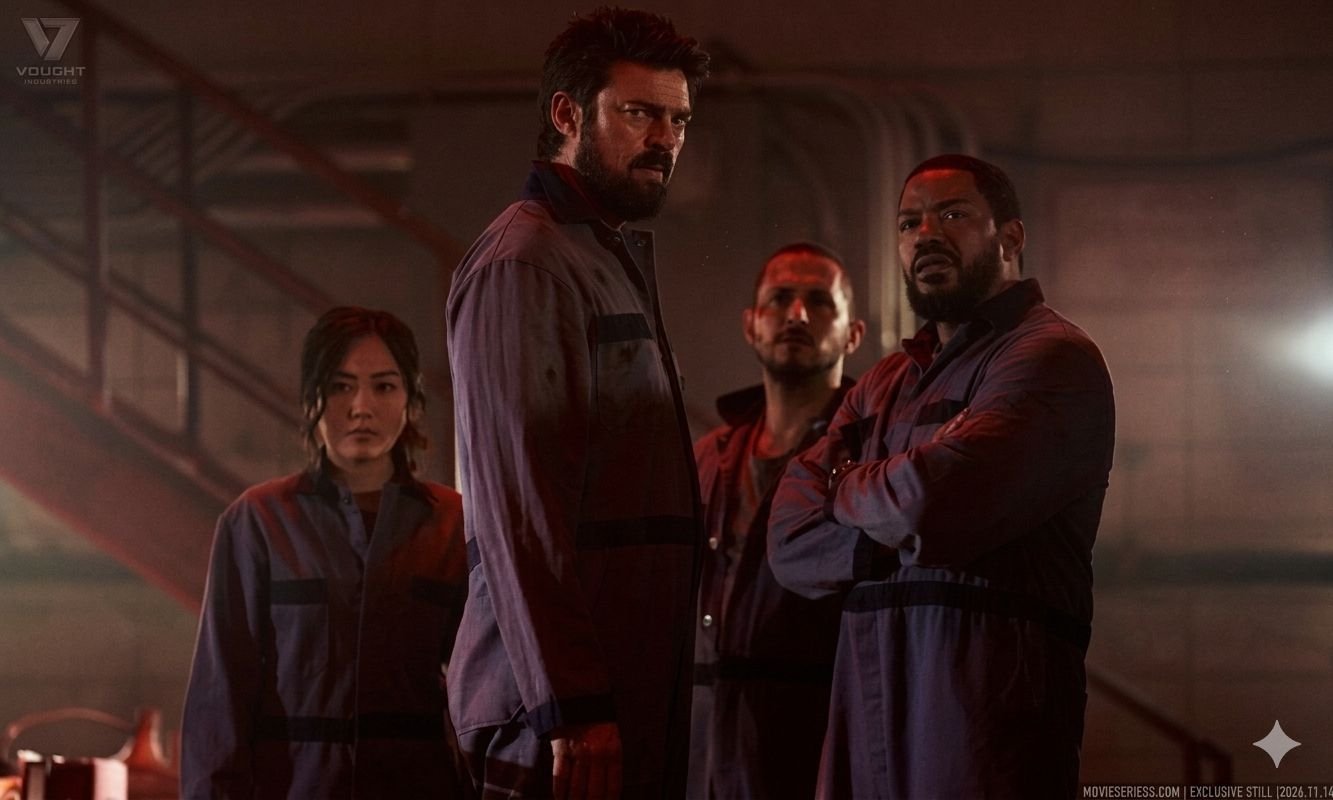
Hughie becomes caught in the orbit of Billy Butcher, a ruthless anti-Supe vigilante who hates superheroes with a passion. The Seven team up with Mother’s Milk and Frenchie to discover more secrets of the powerful superhero organization.
Throughout the season, the show gradually reveals the polished public perception of these heroes. Manipulation. Addiction. Abuse. Corporate greed. Behind the scenes and sponsorships. The deeper Hughie ventures into this shadow world, the more it becomes clear that the real villains aren’t supervillains, but the heroes.
Homelander is what makes the show so dangerous
Every great season of television needs a memorable villain, and that role fell to Homelander in The Boys.
Homelander doesn’t have to bark like a traditional villain to scare people. He is terrifyingly calm, and he knows that none of the people around him could actually stop him. That imbalance of power puts tension in pretty much every scene he’s in.
What makes the writing so effective is that the show never turns him into a cartoon monster. Behind the patriotic image and contrived smile is someone emotionally broken, emotionally alone and desperately in need of control. There are moments during the season where you almost understand him and that makes him scarier.
The series realizes that intimidation in real life is not always done by violence. Sometimes, it comes from uncertainty.”
Starlight Brings Disorder to Mankind
The show is brutal and darkly funny, but Starlight provides the emotional grounding for Season 1.
She walks into The Seven with real optimism and knows that superheroes are supposed to protect people. It’s one of the season’s strongest story arcs to watch that idealism slowly crumble. The show uses her story to explore celebrity culture’s exploitation, the manipulation of corporate image, and the pressure to be perfect in the public eye.
Her relationship with Hughie also provides a counterpoint to the darker elements of the story. Their awkward chemistry is a welcome relief in a series filled with manipulation and violence.
But the important thing is that the show is never treating Starlight as a side character. Her own character arc becomes as important as the bigger conspiracy plot.
The Series Balances Satire and Horror Better Than Expected
One of the biggest reasons The Boys works is tonal control.
The show can veer from grotesque violence to hilarious corporate satire in minutes and not feel inconsistent. Fake movie trailers, political campaigns, product endorsements, and carefully managed media appearances constantly remind viewers that superheroes in this universe are less like protectors and more like global influencers.
But underneath the humor is real discomfort.
The Seven are marketed like celebrities, but many of them are broken people, emotionally caught in a corporate machine. Even the most unredeemable characters gain surprising depths over time. Take The Deep for instance. One of the most hated characters in the series, but later episodes sympathize with him during his humiliating downward spiral. Quite unexpected.
The emotional unpredictability makes the show interesting for all eight episodes.
Violence With A Mission
There’s no denying that The Boys is pretty graphic. Gore, disturbing injuries, and brutal deaths are common throughout the season, with explosions of gore. But unlike many shows that use violence just to shock, here it’s for a bigger purpose.
The violence is too violent, and always a reminder of how horrible superpowers would be in real life. When superheroes go out of control – even for a moment – ordinary people suffer catastrophic consequences.
There is no messing about and the action scenes have real weight to them. No one is safe and the damage is permanent.
What Makes Season 1 Different From Other Superhero Shows
The real accomplishment of The Boys Season 1 is that it never quite depends on spectacle. “There’s a lot of violence, there’s a lot of satire, but it’s still a very character-driven show.
By the end of the season every major character has changed:
Hughie goes from victim to active participant.
Butcher’s fixation begins to take hold.
Starlight loses her naivety.
Homelander is getting less stable by the minute.
The Seven gradually expose cracks in their carefully constructed image.
The shifting relationships give the series so much more than the action.
You gotta give the show credit for its pacing too. The season is a mere eight episodes long, so there’s no room for filler, but room for its characters to breathe. Each episode advances the larger mystery and expands the world naturally through news broadcasts, ads and public relations campaigns.
Concluding Thoughts
And The Boys season 1 couldn’t have come at a better time. Already familiar with traditional superhero storytelling, the series was able to deconstruct those expectations in creative ways.
But more than that, the show knew satire works best when there is some truth to it. Below the blood and chaos lies a sharp commentary on celebrity worship, corporate control, political branding and the dangers of unchecked power.
The first season is still one of the most audacious superhero television premieres in recent memory, years later.
Conclusion
The Boys Season 1 is bloody, smart, emotionally complex and always entertaining. Rather than just poking fun at superhero culture, it reworks the genre into something darker, smarter and far more unpredictable.
If you’re tired of cookie-cutter superhero tales, this show feels like a full reset button.