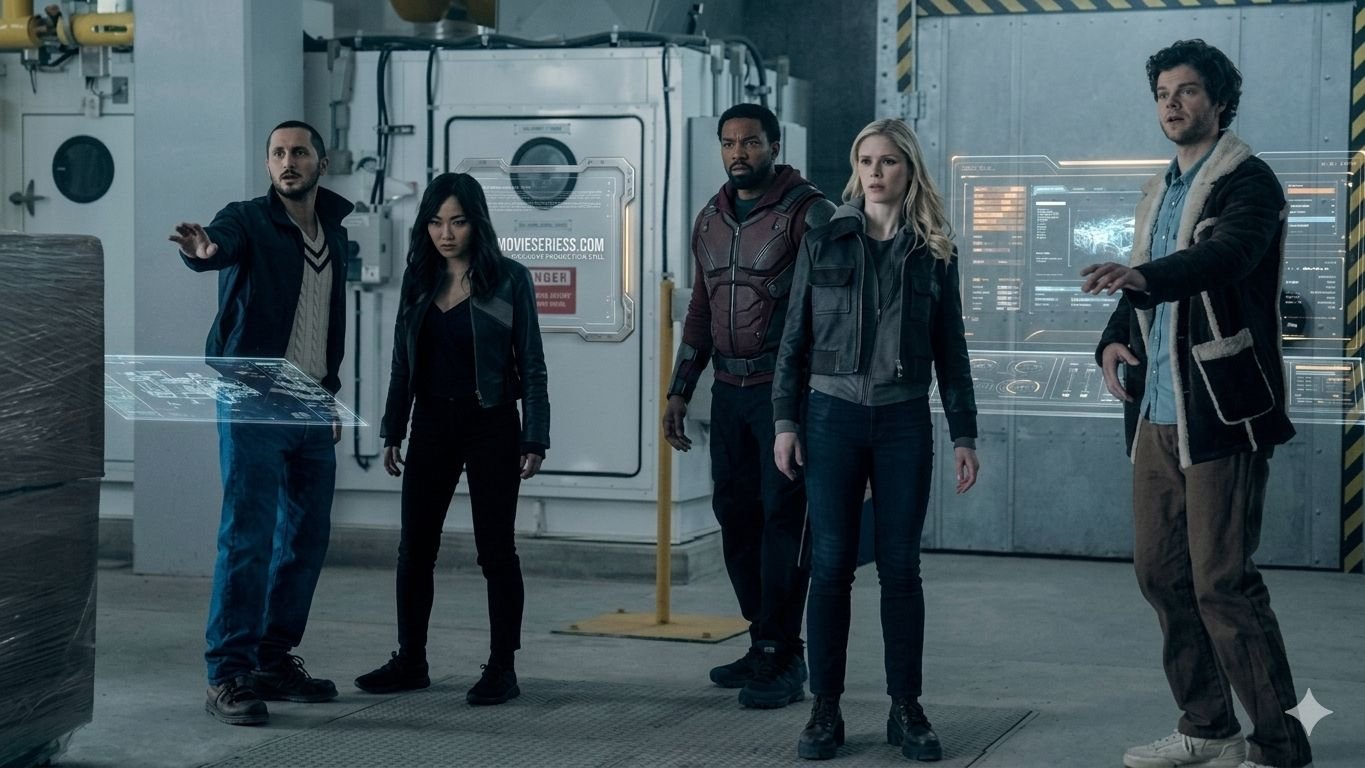
Meta Description:
The Boys Season 5 provides brutal action and strong performances, but its slow pacing undercuts what should have been an explosive finale.
Introduction:
The Boys, after years of blood-soaked satire, political jabs, and superhero madness, finally arrives at its final season with enormous expectations hanging over it. The series made its reputation by satirizing celebrity culture, corrupt power structures and America’s obsession with caped saviors. It was outrageous, unpredictable and often smarter than critics gave it credit for.
Season 5 promises the ultimate showdown of Butcher vs Homelander. Instead, the closing chapter is curiously ambivalent about what kind of ending it wants to be. There are flashes of greatness throughout the season – some genuinely shocking moments, brutal action scenes and another unforgettable performance from Antony Starr – but the story keeps pulling away from the urgency that made the show so addictive in the first place.
The Boys takes an unusual amount of time to play like it has years to go to explore side stories for a series in its final eight episodes.
A World Already in Ruins
The season starts out in a darker place than it has ever been. Now Annie and the Starlighters are branded enemies of the state, pushing her ever deeper into underground resistance territory as the public narrative turns ever more hostile. Meanwhile Butcher continues to obsess over a virus that could kill every supe for good, including Homelander himself.
On paper, the stakes seem huge and the early episodes do a decent job of conveying that tension. MM, Hughie and Frenchie are in internment camps, so there’s an immediate danger there. And then there’s the terrifying possibility with Homelander looking for the original Compound V: a version of him that can never die.
And bringing Soldier Boy back in is another unstable dynamic. Some of the season’s best psychological moments come from watching Homelander align himself with the father who once tried to kill him.
But somewhere after the opening stretch the momentum begins to slip away.
Antony Starr Steals the Show Once Again
If there’s one sure reason to keep watching, it’s Antony Starr’s performance as Homelander.
At this point the character has gone beyond the usual villain. Starr plays him as a fragile narcissist who is always seconds away from emotional collapse. One scene he’s terrifying, the next he’s a giant child seeking validation. One look at his face and there can be more tension than entire episodes.
Homelander is scarily similar to Joffrey Baratheon at times this season. He’s a strong dude throwing a tantrum when he’s not worshipped enough. That unpredictability makes the character interesting even when the surrounding plot begins to ramble.
The show is clearly aware that Homelander is still its biggest weapon, and thankfully Starr performs at a level worthy of the finale.
The Problem With Stretching Everything Out
Season 5’s biggest problem is not poor acting or shoddy production values. It’s running.
The season frequently interrupts its central conflict for side trips that would better fit a long-running 20+ episode network drama. Mini-heists, emotional bonding missions, side pairings, and character-centric adventures are fun on their own but maddening together.
In normal circumstances, these quieter interludes would have been sufficient. Some character interactions are actually refreshing even. MM and Annie have moments that add to the emotional maturity of the series, and Sage and Ashley occasionally create interesting tension in the chaos of Vought.
But this is the last season.
Each detour works against the story’s sense of urgency when viewers are expecting escalation, fallout and confrontation. The show pretends that it has all of the time in the world left, even as it races to an ending it can no longer build to.
By the time the finale remembers that it should feel monumental, too much energy has been spent elsewhere.
Kimiko’s Arc Becomes One of the Season’s Biggest Bombs
Kimiko is more affected by the writing direction this season than most characters.
Her learning to speak again might have been one of the most emotional developments in the series. Instead, the show turns it into a long comedy act based on memes and slang and a never-ending series of adult jokes. At first you are surprised by the humor. Eventually it’s so repetitive it totally weakens the character.
Karen Fukuhara does everything she can to make the material work, but the writing rarely gives her the emotional consistency Kimiko needs. One moment she is used as comic relief, the next she’s doing very serious emotional dialogue during key scenes.
The tonal whiplash is something you cannot miss.
This is especially disappointing as Kimiko used to have so much emotional heft without even the need for dialogue.
Spectacle, Violence and Satire Still Work
Even when the storytelling falters, The Boys still knows how to create unforgettable visuals.
The action choreography remains inventive and brutally fun. The show still comes up with bizarre new ways to weaponize superpowers, and some of the fight sequences are both hilarious and horrifying at the same time. The gore is excessive as usual, but is done with enough style that the viewers almost cannot look away.
The series also retains all its political and media satire. The production team understands the absurdity of the world they’ve created, from gigantic Homelander images, to deliberately low-quality looking screen tests mocking modern streaming CGI.
Creator Eric Kripke also promised long-time fans of Supernatural will see a few references and cameos throughout the season. Those moments add charm, even if some viewers might feel the callbacks sometimes overshadow newer characters who deserved bigger roles.
That imbalance has an unexpected victim in the form of Marie from Gen V, who spends much of the season on the sidelines despite earlier hype about her potential significance.
Sage never gets as smart as the show says.
Sage is advertised as the smartest man alive, but the writing doesn’t usually convince you of that.
More often, the character acts as a useful plot device rather than a convincing mastermind. Her plans seem inconsistent, and many twists hinge on viewers simply accepting that she somehow saw everything coming.
Writing genius characters is always hard, but Season 5 has a particularly hard time making Sage seem genuinely scary on an intellectual level. Her storyline is mostly confusing, not adding to the conflict.
Does the final episode really work?
The last episode finally brings the season the urgency it had been lacking.
There are emotional payoffs, big confrontations, and moments that remind the audience why The Boys became such a phenomenon in the first place. Some deaths are hard and the darker emotional tone returns just in time to save parts of the ending.
Still, the finale can’t quite escape the feeling that the season took too long to get there.
Ironically, a lot of fans might leave thinking Season 3 already had the perfect blueprint for the series’ ending. Season 5 feels strangely stretched out, even with fewer episodes, compared to the tighter storytelling and building tension of previous years.
Ultimate Judgment
The Boys Season 5 isn’t a disaster, but it’s a surprisingly uneven farewell for one of television’s boldest modern series.
The performances are still great, especially Antony Starr’s terrifyingly entertaining Homelander. The violence is inventive, the satire still bites, the show still gives us memorable individual scenes. But the pacing issues become impossible to ignore in a season that should have been relentlessly focused.
Rather than building toward some sort of unrelenting final war, the series often gets lost in side quests and filler-type narratives that undercut the emotional impact of the ending.
There is enough here for long-time fans but the final season never quite manages to reach the explosive heights the show once seemed destined for.
Final Score: 2.5 out of 5