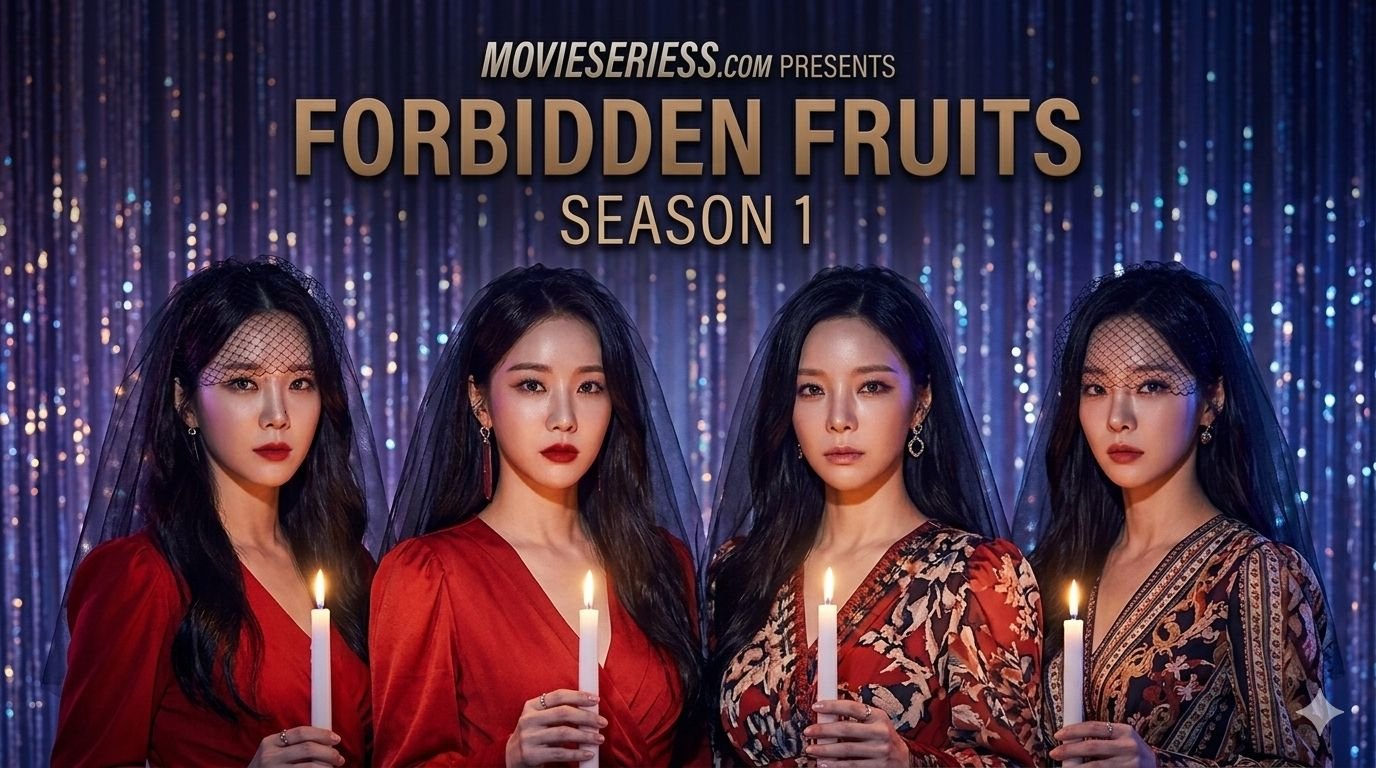
Forbidden Fruits is a dark comedy/horror/psychological drama mash-up that tells a disturbing tale of trauma, control and toxic sisterhood. Based on a stage play by Lily Houghton and co-written by Houghton and director Meredith Alloway, the film follows a group of women whose close bond begins to break down under the strain of secrets they’ve been hiding.
The story’s focus is Apple, a charismatic but controlling leader who has created a cult-like sisterhood, Paradise. The ending of the film leaves audiences wondering whether Apple is a tragic victim of abuse and abandonment or a dangerous villain who is responsible for her own horrific actions.
The Story Behind Free Eden and Paradise
Apple is a sales executive for Free Eden, a retail store, and has recruited two loyal followers, Fig and Cherry. Together, they make up the heart of Paradise, a sisterhood with strict rules and absolute loyalty to Apple.
To the outside world, the group seems inseparable, but cracks start to form when a new employee named Pumpkin begins working at the store. Apple views Pumpkin as a promising addition, but Pumpkin has her reasons for stepping into their world.
Pumpkin, who knew nothing, was just recently told by Apple that they are half-sisters. Instead of telling the truth immediately, she opts to get closer to Apple and investigate disturbing questions about their family’s past.
Why Pumpkin Is Targeting Apple
Pumpkin’s curiosity soon turns to suspicion when she discovers evidence that points to Apple’s possible involvement in their father’s death.
But the further she digs, the more she discovers that Apple has been hiding more than family secrets. The sisterhood is based on manipulation, fear, emotional control. Pumpkin’s investigation jeopardizes the fragile balance Apple has kept for years and puts everyone around her at risk.
The group’s dark secret
Before Pumpkin came along, Paradise had a fourth member named Pickle.
The trouble began when Pickle started dating a young man named Ashton. Apple saw the relationship as a threat to the sisterhood and persuaded the group to take part in a ritual that would destroy anyone who threatened Paradise.
What was meant to be a harmless act turned into horror as Ashton mysteriously fell into coma after eating poisoned food. Supernatural or not, the event crushed Pickle.
Pickle later killed himself in the mall, overwhelmed with guilt and grief. Fig and Cherry both struggled to cope with the trauma, but Apple would not discuss the incident, and everyone had to suppress their feelings and get on with life as though nothing had happened.
Did Apple Kill Her Father?
The films climax confrontation finally brings the truth to light.
She admits to killing her dad, since they’re stuck in the mall and there’s a tornado emergency. He left her family, as she described it, and decided to start a new life with Pumpkin’s mother instead.
Apple watched her mother suffer while her father provided solace and stability elsewhere. She held a grudge for years and eventually got her revenge by poisoning him with snake venom.
To Apple, the murder was justice. It showed Pumpkin that her sister was becoming something dangerous and unstable.
Fig and Cherry’s tragic fate
Tensions escalate and Apple becomes more and more paranoid that her best friends are turning against her.
Fig reveals that she intends to leave Free Eden and go to graduate school, which Apple sees as betrayal. Meanwhile, Cherry’s emotions begin to unravel as years of guilt and pressure finally take their toll on her.
An argument gets out of hand and Cherry injures Fig’s boyfriend, Norman, by accident. Chaos erupts. Then there’s that tornado warning and everyone heads for safety.
Cherry is stuck on an escalator in the mall as it starts to collapse. Apple seems to help but she doesn’t save her before debris falls and kills Cherry instantly.
Fig sees enough to believe Apple killed Cherry on purpose. She tries to flee, frightened, but is killed moments later when a piece of falling glass hits her during the storm.
By the time the disaster is over, Apple’s entire inner circle is wiped out.
Apple doesn’t kill pumpkin.
Fig and Cherry are dead, and Apple takes Pumpkin to a fountain, speaking calmly of rebuilding Paradise together.
Their talk soon becomes an argument about the murder of their father. Pumpkin won’t buy Apple’s excuse and stands up for the man Apple hated.
This is a crushing blow for Apple. As her sister, she thought Pumpkin would finally understand the pain, the abandonment she had suffered. But Pumpkin blames her, and sees her as perpetrator, not victim.
This argument hits Apple’s most sensitive emotional chords. She is filled with rage and heartbreak and strangles Pumpkin, leaving her lifeless body in the fountain.
That’s the murder, the point where it’s hard to feel any shred of sympathy for Apple left.
Forbidden Fruits What End
The final scene takes place later in Arizona.
Apple, covered in blood and apparently unfazed by recent events, walks into another shopping mall and orders a pumpkin spice latte. There, she sees three young women wearing identical flower bracelets.
When the women see the bracelet of fruit on her wrist they invite Apple to come to the opening of a new Free Eden location and offer her a job.
The scene parallels the start of the film and strongly suggests that Apple is willing to begin anew. Rather than learn from her past, she appears willing to build a new Paradise with a new set of followers.
Apple: The Bad Guy or the Good Guy?
The film doesn give a neat answer on purpose.
Apple’s childhood was filled with abandonment, betrayal, and emotional neglect. Her father left her family. Even killing him didn’t change the fallout from her isolation. Those experiences are why she’s so desperate for control and belonging.
But while it accounts for Apple’s trauma, it doesn’t excuse what she did.
She manipulates her friends, cuts them off from outside relationships, represses their feelings, and ultimately is responsible for several deaths. A search for family becomes an obsession for power.
The ending indicates that Apple has gone from wounded survivor to dangerous abuser. Her pain may have given birth to the monster, but she ultimately chooses to accept it.
Forbidden Fruits ends with a chilling reminder that Apple has not changed. Instead, she is ready to repeat the same cycle of control, manipulation, and violence with a brand new set of followers.